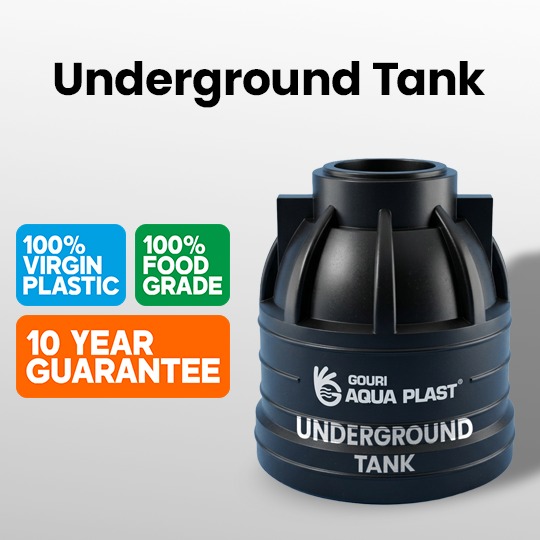
When it comes to smart, space-saving water storage, nothing beats a good under ground water storage tank. If you're building a new home, renovating your terrace, or just tired of unsightly overhead tanks eating up your rooftop space, Gouri Aqua Plast's underground water tanks are built exactly for that need. We manufacture our tanks using premium-grade, food-safe plastic that's tough enough to handle years of underground pressure, soil movement, and daily wear without cracking, leaking, or degrading. Whether it's for drinking water storage, gardening, or backup water supply during power cuts, our tanks keep your water clean, cool, and contamination-free all year round.

- Available Sizes : 1000 to 2000.
- Available Colours : Black
- Brand : Gouri Aqua Plast
- Honestly, once you look at the full list of underground water tank advantages space savings, cooler water, zero rusting it's easy to see why fewer people are going back to old-school overhead tanks these days
- The ribbed structure spreads out soil pressure evenly, so there's no risk of it caving in over time
- Being underground means it's naturally cooler, which keeps water fresher for longer
- The sealed neck keeps out dust, rainwater, and insects without needing constant upkeep
- No rusting, no corrosion it just holds up, year after year
- Interior walls stay smooth, so cleaning is rarely a chore
- If you're comparing underground water tank 1000 and 2000 ltr price options, you'll find our range priced fairly without cutting corners on material quality
- We can also walk you through underground water tank dimensions for different capacities, so you know exactly how much space to dig out before you even order
- A lot of our customers also ask about underground water tank location as per vastu before finalizing the site and while we always suggest consulting a vastu expert for specifics, north-east or north direction is generally considered favorable for water storage
- Most commonly installed in individual homes that want a steady, clean water supply without rooftop clutter
- Apartment complexes often use one large underground tank as a central reservoir before pumping water up to overhead tanks
- Works nicely for rainwater harvesting setups too collect it below, use it for gardens or washing later
- Farmhouses use them to store irrigation water away from the heat, so it doesn't evaporate as fast
- Also common in office buildings and small commercial setups that just need dependable daily water storage
Installing an underground tank isn't complicated, but a few things matter more than people expect:
- Pick a spot away from tree roots and any underground cables or pipelines
- Dig the pit a bit larger than the tank itself you'll need room for a proper base and backfilling
- Lay down a solid concrete or compacted sand base first; skipping this step is how tanks end up sitting unevenly
- Before you backfill, fill the tank about a third with water this stops the walls from caving in under soil pressure while you're filling around it
- Backfill slowly, in layers, using clean sand or soil no stones, no debris
- Keep the tank's neck slightly raised above ground so surface water doesn't pool around the opening
- Check every plumbing joint and apply proper sealant before closing up it's the easiest underground water tank leakage solution, done right the first time instead of digging the tank back out later
